Workplace wellness ROI: how health amenities drive occupancy rates
The connection between employee health and business success has never been clearer. As companies work harder to keep great people, workplace wellness ROI (return on investment) is moving to the top of the priority list. Health amenities aren’t just nice-to-have perks anymore; they’re strategic investments that directly impact your bottom line and your ability to attract top talent to the office.
Investing in wellness isn’t just about looking after your team’s health, it’s about creating a workplace people actually want to be part of. When the office feels worth the commute, you’re more likely to see people show up, stay engaged and make the most of the space you’ve invested in.
The business case for wellness investment
When it comes to wellness programs, the numbers speak for themselves. Studies show that for every dollar put into employee wellness, companies see a return of $3 to $6 through lower healthcare costs and higher productivity (National Library of Medicine). But the impact goes far beyond just saving money.
Companies that offer strong wellness amenities like gyms, mental health support and nutrition programs tend to see 15−25% higher occupancy rates compared to those that don’t (2023–2024 CBRE Global Workplace & Occupancy Insights). These features often result in a more efficient use of office space and a stronger return on real estate investment.
The ripple effect is powerful. When people come into the office more often, collaboration improves, culture strengthens and teams feel more connected. This leads to better business performance and helps to keep your best people around.
How health amenities transform office utilization
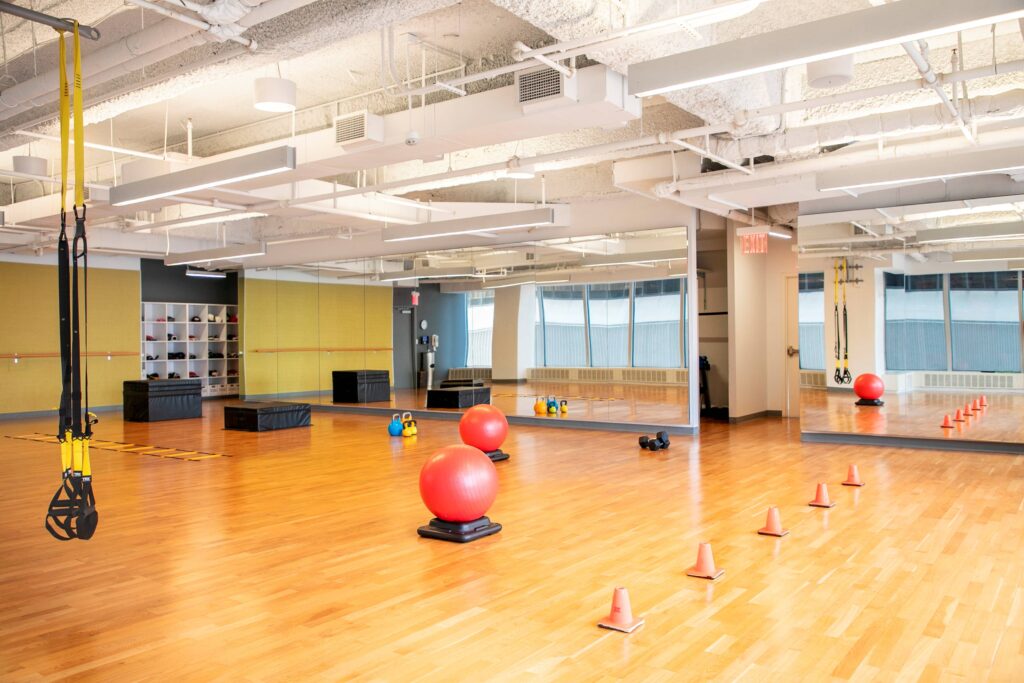
Modern wellness amenities serve as powerful magnets that draw employees back to the office. Fitness centers, yoga studios, meditation rooms and healthy food options create an environment of well-being that’s difficult to replicate at home.
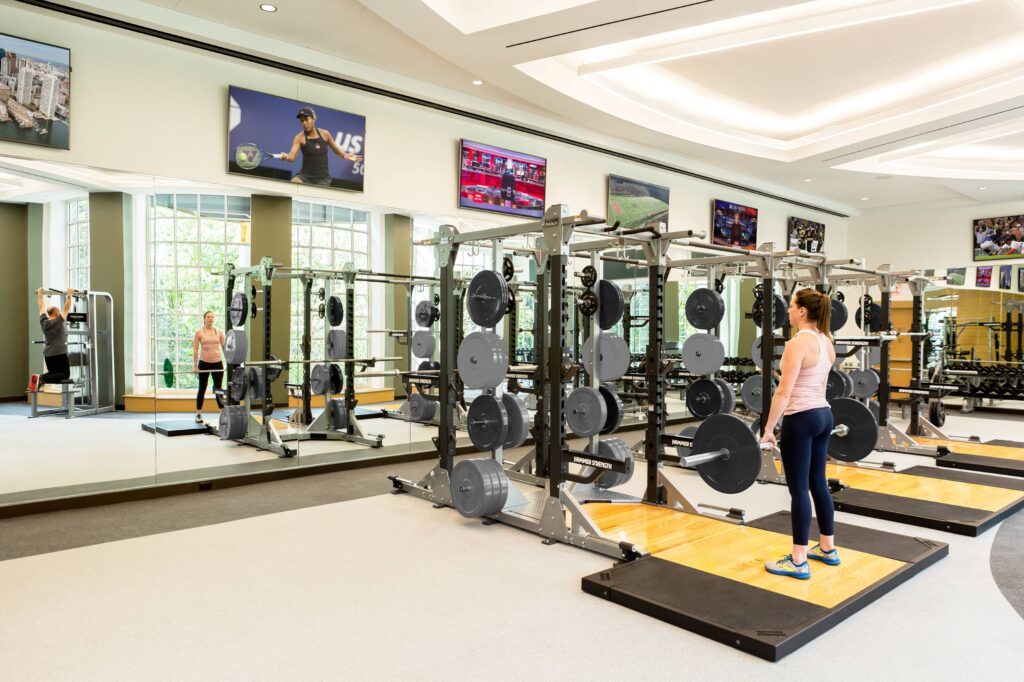
A key barrier for many employees is simply a lack of access. In a Steelcase Workplace Index survey, 62% of workers said they don’t exercise at work because there’s no suitable place to do so. Yet, 80% believe exercise improves their well-being and 78% say it boosts their productivity. When those barriers are removed through well-designed fitness spaces, people are more likely to exercise and be physically present at work.
These amenities turn the office into a destination, not just a desk. They create daily routines, encourage breaks that support focus and energy, and foster informal interactions that strengthen team culture. With more employees choosing to spend time in the workplace, companies see improved space utilization, stronger justification for real estate investments and better employee engagement overall.
Consider the impact of a well-designed fitness facility: employees who use on-site gyms typically are more likely to visit the office than those without access (National Library of Medicine). This review found that employees moving to “active design” buildings featuring fitness rooms and biophilic elements reported higher energy, motivation to come to work and overall health, compared to traditional office layouts. This increased presence creates natural opportunities for collaboration and strengthens team dynamics.
Mental health amenities also play a crucial role in occupancy decisions. Quiet rooms for meditation, counseling services and stress management programs signal that you understand the complete picture of employee well-being. When people feel supported in all aspects of their health, they’re more likely to view the office as a place where they can thrive.
Nutrition programs round out the wellness ecosystem. Healthy meal options, nutrition counseling and cooking demonstrations create community experiences that remote work simply cannot provide. These programs often become social hubs that encourage longer office stays and deeper connections between colleagues.
Measuring your workplace wellness ROI success
Understanding the return on your wellness investment requires looking beyond traditional metrics. While healthcare cost reductions remain important, occupancy-related measurements provide clearer insights into program effectiveness.
Badge swipe data reveals usage patterns and helps identify which amenities drive the most office visits. Employee surveys can uncover which wellness offerings influence the decision to come to the office. Productivity metrics, including project completion rates and collaboration frequency, often improve when wellness programs are introduced.
Tracking attendance at wellness events and programs can also provide valuable insight into future office occupancy. Employees who take advantage of on-site wellness amenities tend to feel more connected to the workplace and are more likely to choose in-person work when given the option.
Additionally, research by the Building and Environment journal has shown that spaces designed with wellness in mind, such as meditation rooms and fitness centers, experience higher traffic and engagement. This often correlates with greater employee satisfaction and improved retention rates.
Strategic implementation for maximum impact
Successful wellness programs require thoughtful planning that aligns with your specific workforce needs and space constraints. Start by surveying employees to understand their wellness priorities and preferred program types.
Location matters significantly. Wellness amenities should be easily accessible and integrated into the natural flow of the workplace. Hiding a fitness center in a basement rarely drives the same engagement as a visible, welcoming space on a main floor.
Technology integration also amplifies program effectiveness. Apps that schedule fitness classes, track wellness goals and connect employees with similar interests create engagement that extends beyond physical amenities. This digital layer helps maintain momentum and builds the social connections that make office visits more appealing.
Building a wellness-driven workplace strategy
The most successful workplace wellness programs become integral parts of company culture rather than standalone initiatives. With regular program evaluation, you can ensure your wellness investments continue delivering strong returns. Consider performing quarterly reviews of utilization data, employee feedback and occupancy trends to identify opportunities for improvement and expansion.
Communication plays a vital role in program success as well. Employees need to understand the available resources and feel encouraged to use them. Regular wellness communications, success stories and program updates help keep offerings top-of-mind and drive continued participation.
Budget considerations should account for both direct program costs and potential real estate savings. When wellness amenities drive higher occupancy rates, they can justify investments in premium office locations or larger spaces that might otherwise seem excessive.
Future-proofing your wellness investment
Workplace wellness is constantly evolving, with new ideas and trends emerging all the time. Designing a workplace that genuinely supports employee well-being, boosts occupancy and delivers measurable value requires thoughtful planning and expertise. If you want to see how smart investment can increase office engagement and drive meaningful workplace wellness ROI, schedule a conversation with our team. We’re here to help design solutions that fit your unique needs and goals.
Sources: