Well-being culture in the workplace: how to make it part of how work gets done
Most organizations offer well-being perks. Far fewer build a true well-being culture.
There is a meaningful difference. A gym subsidy or meditation app is a benefit. Culture shows up in how meetings are run, how managers communicate and how the workday is structured. When well-being is treated as a perk, it sits beside work. When it becomes culture, it is built into work.
The challenge is that perks are easy to add and easy to ignore. Employees who are already overwhelmed rarely make time for optional programs. As a result, engagement stays low and outcomes do not change.
In this article, you will learn:
- Why perks alone do not create lasting change
- How to embed well-being into meetings, workflows and daily habits
- What leaders can do now to model well-being at work
- Simple actions your team can start this week
Research from SHRM’s 2024 State of Global Workplace Culture report shows that organizations embedding well-being into their culture report higher engagement and lower turnover. Employees in positive cultures are nearly four times more likely to stay with their employer. Optum Workplace Well-being helps organizations make this shift, moving from well-being as an add-on to well-being as a way of working.
Why perks do not create a well-being culture in the workplace
A perk is transactional. A culture is behavioral.
When well-being sits outside the flow of work, available only if employees have time and motivation, it is often underused. McKinsey Health Institute research shows that employees under the highest stress are often the least able to access optional resources. Workload and exhaustion prevent them from stepping away.
Building a well-being culture means weaving well-being into everyday operations rather than adding it as an extra. It requires designing work so that healthy habits become the path of least resistance.
Try this today: Review your team’s week and identify one moment where a well-being habit could be built in, not added on.
Start with meetings
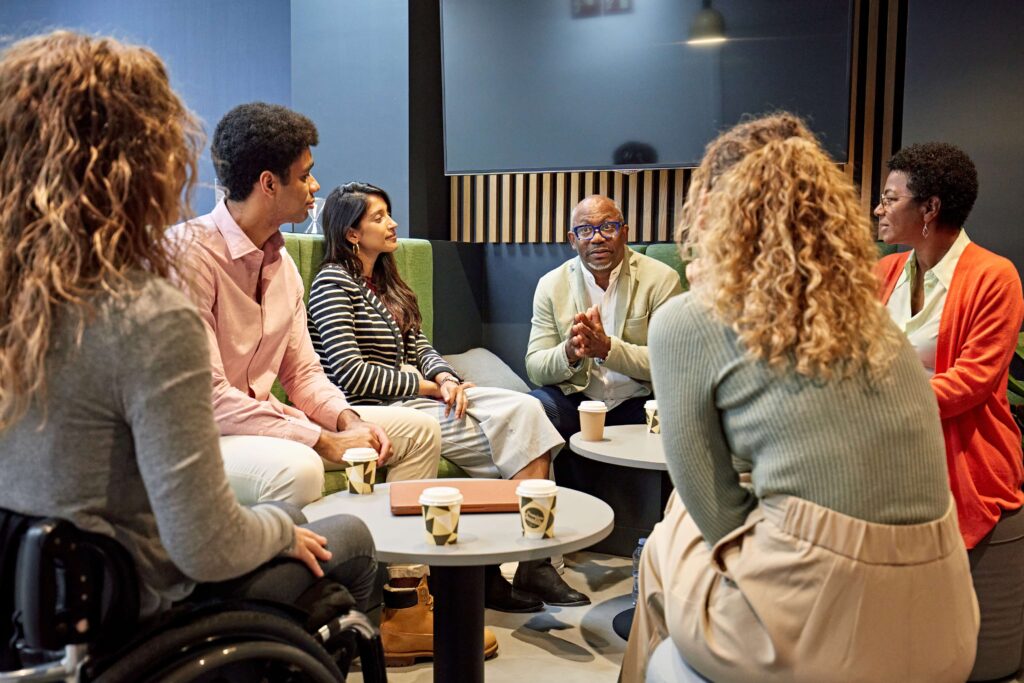
Meetings are one of the most effective places to embed well-being.
Many employees spend hours in back-to-back meetings with little transition time. This constant context switching increases fatigue and reduces focus. Small changes can create meaningful space.
Introduce meeting norms such as 25-minute meetings instead of 30, or 50 minutes instead of 60. Start meetings with a brief check-in question to help people share how they are showing up.
These small practices reinforce that employees are valued as whole people, not just for output.
Try this today: Shorten your next meeting by 10 minutes and open with: “What is one word that describes how you are showing up today?”
Redesign how work is structured day to day
Workflow design directly impacts well-being.
When schedules allow no buffer time, include constant availability expectations and lack focus time, stress becomes embedded in the system. Even motivated teams struggle to prioritize well-being in this environment.
Embedding well-being into daily work means redesigning these structures intentionally.
Normalize protected focus time. Reconsider response time expectations. Build movement into routines, such as walking one-to-one meetings or standing check-ins.
Try this today: Block 30 minutes of focus time on your calendar this week. Treat it as a nonnegotiable commitment.
Make leadership behavior the loudest signal
Culture is shaped by what leaders do, not what they say.
If a manager sends emails at 11 p.m., skips breaks and never uses vacation time, those behaviors become the norm. A 2024 Gallup study shows employees look to their direct manager as the clearest signal of acceptable workplace behavior.
When leaders model boundaries, rest and openness about well-being, they create permission for others to do the same.
This is why leadership development is essential to building effective well-being strategies. Providing tools is not enough. Leaders must model them consistently.
Try this today: Ask a leader to share one boundary they actively protect and why it matters.
Build check-ins that add real value
One-to-one meetings are often underused as a well-being tool.
Many check-ins focus only on tasks. Adding a simple question, such as “What support do you need this week?” takes seconds but changes the conversation. Over time, these discussions build trust and surface challenges earlier.
This kind of embedded support is one of the most overlooked benefits of well-being programs. It strengthens both engagement and retention.
Try this today: Add one well-being question to your next one-to-one agenda.
Building a lasting well-being culture
Perks still have value, but they are not enough.
A gym membership will not change how someone feels during a full day of meetings and deadlines. Sustainable change happens when well-being is reflected in how work is designed, how meetings run and how leaders show up.
It does not require large-scale transformation. It requires small, consistent decisions over time.
Start with one meeting, one workflow change or one leadership behavior, then build from there.
To learn how Optum Workplace Well-being can help your organization create a lasting culture of well-being, contact our team.
Sources