Biophilic design in the workplace: nature isn’t just beautiful — it’s beneficial
Biophilic design brings the calming influence of nature into the workplace, supporting well-being, focus and connection. Research published in the Journal of Environmental Psychology shows that integrating natural elements into office environments can reduce stress, spark creativity and enhance overall health.
For organizations committed to employee well-being, biophilic design offers a practical — and proven — way to create spaces that inspire and enhance productivity.
What biophilic design means for your workspace
Biophilic design connects people with nature through intentional architectural and environmental choices. It goes beyond adding plants — embracing natural light, living walls, water features, organic materials like wood and stone, and even nature-inspired patterns and textures.
The goal is simple: to create spaces that feel instinctively comfortable and energizing — places where people can truly thrive.
Why it matters: benefits of biophilic design
Nature-inspired workspaces support employee health and performance in meaningful ways.
- Lowers stress levels. Natural elements help regulate stress responses, promoting calm and resilience throughout the day.
- Sharpens thinking. Exposure to nature and daylight improves focus, memory and problem-solving.
- Improves physical health. Natural light supports healthy sleep cycles, while plants improve air quality and oxygen levels.
- Boosts creativity. Nature encourages mental rest, which can help fresh ideas emerge.
- Improves mood. Regular contact with natural elements supports emotional balance and positivity.
- Increases productivity. When people feel better, they work better, with greater efficiency and engagement.
- Strengthens team connections. Nature-rich spaces foster informal interactions that build trust and spark collaboration.
How to bring biophilic design to wellness spaces
- Start with light. Maximize natural daylight by placing workstations near windows, using glass partitions and choosing light-filtering treatments. In areas without natural light, opt for lighting that mimics daylight patterns.
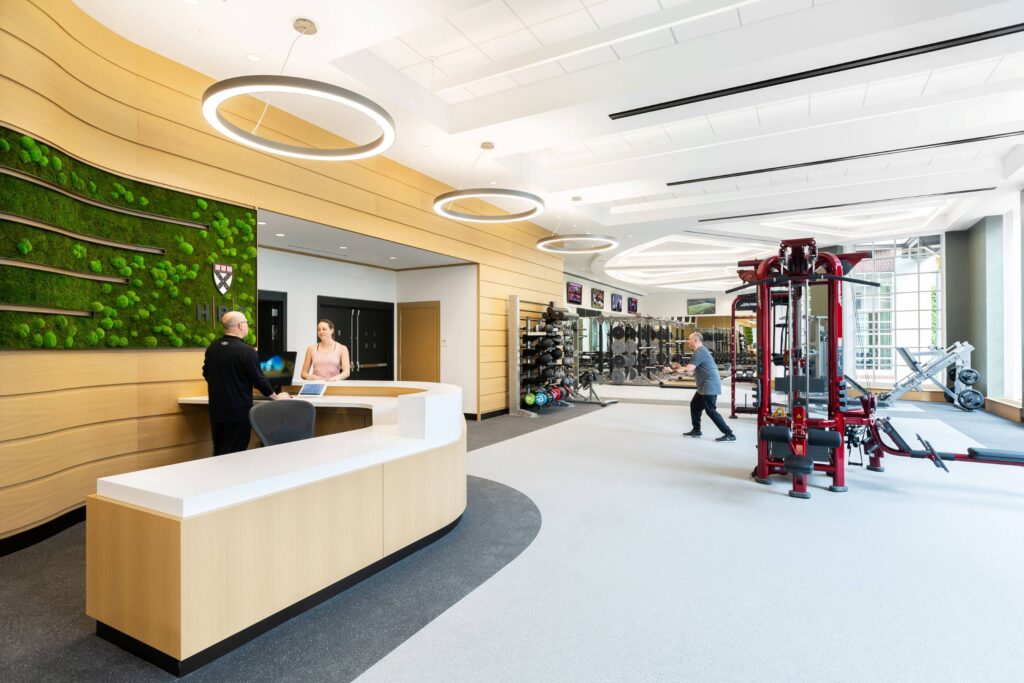
- Add living elements. Green walls enhance acoustics and visual appeal. Desk plants offer personal connection to nature. Larger planters can define zones and create natural boundaries.
- Use natural materials. Wood, stone and natural textiles bring warmth and texture, especially in break rooms, wellness areas and collaborative spaces.
- Include water features. Fountains or water sounds in meditation rooms can reduce distractions and promote calm.
Supporting mental health through design
Biophilic design activates the parasympathetic nervous system, helping people shift from stress to balance. Even brief exposure to nature can reduce anxiety and restore mental clarity (Springer Nature). The thoughtful use of natural elements can create environments that support both emotional well-being and daily productivity. Wellness rooms with plants and natural light offer a place to reset, while meeting spaces with views of greenery help keep conversations grounded and productive. Together, these strategies demonstrate how nature can be woven into everyday moments.
Designing spaces that bring people together
Just as natural elements can calm the mind, they also have the power to draw people in. Outdoor terraces, indoor gardens and atriums become natural gathering spots that support spontaneous conversations and team bonding. These shared environments set the stage for connection.
Creating variety Within these spaces further strengthens engagement. Quiet zones with soft light and nature sounds support focused work, while bright, plant-filled areas encourage collaboration. By offering a spectrum of nature-rich environments, workplaces can give employees meaningful in how — where — they work best.
Getting started: practical tips
You don’t need a full renovation to begin. Small changes make a big impact:
- Add plants to shared spaces
- Use full-spectrum lighting
- Incorporate nature-themed artwork
- Choose furniture with natural finishes
Engaging your team for input is equally important. Ask which natural elements would improve their workspace and how they prefer to experience them. Preferences will vary — some may want desk plants, while others may value outdoor break areas or more natural light. Listening closely helps you tailor solutions that genuinely resonate.
Once the new environment is in place, ongoing care matters just as much as the initial design. Healthy plants signal a consistent commitment to wellness, whereas neglected greenery can quickly send the opposite message. Partner with plant care professionals if needed to ensure the space continues to flourish.
Moving forward with wellness-focused design
Creating spaces where people feel and perform their best takes intention — but the benefits are undeniable. Biophilic design strengthens physical health, supports mental well-being and fosters social connection, all through a single, integrated approach.
Ready to explore how natural design can elevate your workplace wellness strategy? Connect with Optum Workplace Well-being to start building environments where your people can thrive.
Sources: